7.06.2008

Vidal's Prescience

A couple of weeks ago a long-anticipated book arrived at my office: The Selected Essays of Gore Vidal (Doubleday, 2008), edited by Jay Parini (also Vidal's biographer). It provides an excellent selection of Vidal's criticism and essays from 1953-2004. Unfortunately, having lately seen and read interviews with the aged Vidal, I'm afraid that he's becoming a bit predictable, regularly harping on the Bush regime, which seems like too easy a target and doesn't yield much creativity from Vidal's sharp mind.

However, most of these essays represent Vidal at his best: a participant in the nation's history who, with just a slightly haughty air, offers an incisive take on what's going on because of a keen sense of what's happened in the past (chronicled so well in his historical fiction). He refuses any distinction between "high" and "low" culture; all is fair game. Consider, for instance, the hilarious (but deadly serious) account of the "The Top Ten Best-Sellers According to the Sunday New York Times as of January 7, 1973," in which Vidal explores the Koontzes and Graftons of his day (concluding that, in fact, here was the first generation of novelists raised on television). There is a wonderful recollection of Edmund Wilson, as well as an iconoclastic and irreverent essay on "The Holy Family," the Kennedys, in which Vidal predicts a dynasty--in 1967, just months before RFK's assassination.

And reading these essays now, in some cases 50 years later, one has to be struck by Vidal's prescience. For just one example, I would point to some closing reflections in a long essay on Egypt under Nasser, published in Esquire in 1963:

We [Americans] truly believe that we never wanted a world empire simply because we don't suffer from a desire to see Old Glory waving over the parliaments of enslaved nations. But we do want to make a buck. We do want to maintain our standard of living. For good or ill, we have no other true national purpose. [...] Our materialistic ethos is made quite plain in the phrase 'the American way of life.'

I submit that our lack of commitment to any great mystique of national destiny is the healthiest thing about us and the reason for our current success. We are simple materialists, not bent on setting fire to the earth as a matter of holy prinicple, unlike the True Believers with their fierce Either-Ors, their Red or Dead absolutes, when the truth is that the world need be neither, just comfortably pink and lively. Even aid to such a disagreeable and unreliable nation as Nasser's Egypt increases our sphere of influence, expands our markets, maintains our worldly empire. And we are an empire.

While neoconservatism is defined precisely by its invention of and commitment to something like a "mystique" that Vidal cautions against, the pragmatism of the American empire remains solidly in place. And hence Vidal's closing warning is also prescient:

Ultimately, our danger comes not from the idea of Communism, which (as an Archbishop of Canterbury remarked) is a "Christian heresy" whose materialistic aims (as opposed to means) vary little from our own; rather, it will come from the increasing wealth and skill of other Serene Republics which, taking advantage of our increasing moral and intellectual fateness, will try to seize our markets in the world. If we are to end, it will not be with a Bomb but a bigger Buck.

What Vidal's prescience perhaps did not see is that such a displacing Republic would not be quite Serene, but Red.

6.11.2008

Books, Materiality, and Beauty

This is a bit spooky: just this morning, as I was waiting to head out for an appointment, I picked up a brand new volume sitting on my nightstand: a collection of Edmund Wilson's criticism just published in the the Library of America. And to be perfectly honest, I didn't pick it up to read it; I picked it up just to hold it, to caress it. I don't know if you've ever held a LoA volume, but they are pretty much the most sumptuous books one could hope for from an American publisher. They are thick and squat, with Bible-like pages and exquisite bindings, as well as a classic font. There is a weight to the books that is just a pleasure to hold and handle. Most of my library is very pragmatic (i.e., driven by a concern for building content on a budget, and thus populated by alot of Penguin classics paperbacks and such); but every once in a while, when I get a gift certificate, I splurge and also indulge in purchases that reflect the book as object.

How funny, then, to just read John Lancaster's reflections on the same phenomena, with the very same book, in this week's London Review of Books. Wilson, of course, would have taken a certain delight in such fetishization of his work!

5.15.2008

The Reluctant Fundamentalist

A couple of weeks ago I had a brief wait in the Birmingham train station, waiting to catch a train back to York. Somehow I found myself in the bookstore (imagine that!) and picked up a book I'd heard a bit about: Mohsin Hamid's The Reluctant Fundamentalist, which was nominated for the Man Booker Prize (akin to the American Pulitzer). After perusing the blurbs, I opened to the first page which opens thus:
"Excuse me, sir, but may I be of assistance? Ah, I see I have alarmed you. Do not be frightened by my beard: I am a lover of America. I noticed that you were looking for something; more than looking, in fact you seemed to be on a mission, and since I am both a native of this city and a speaker of your own language, I thought I might offer you my services."
Perhaps it was the use of the second person; perhaps it was because I somehow heard this in accent; perhaps it was because of the tension embedded in just these few lines; but in any case, I was hooked. Though I stacks of papers to grade on the train ride home, I bought the book and consumed it, finishing it just as the trained rolled into York station.

The book is set in a timeline that spans pre- and post-9/11 context; the event itself makes only a minimal cameo, though its ripple effects drive the later action of the narrative (tensions between India and Pakistan are much more significant). The novel tracks the "formation," one might say, of a young Pakistani, Changez, by some of America's most powerful institutions, including Princeton, Wall Street, and New York in general. (Of the difference between Princeton and New York, the narrator notes: "I was, in four and a half years, never an American; I was immediately a New Yorker.")

But the story also documents how his personal version of the American dream begins to unravel, because of 9/11, because of a surprising--even unwanted--new sense of allegiance to his homeland, because of a girlfriend who seems to have all one could dream of but who, in fact, suffers a private nightmare.

Hamid's command of the very difficult second-person approach is stunning, allowing him to play with time and ambiguities in quite captivating ways--including a delightfully maddening conclusion. And the story moves quickly while also developing characters: sort of breezy, but with real substance that sticks with you long after you're done the book. In short, a great read for a train ride.

4.27.2008

Teaching as a Postal Vocation

George Steiner's latest book, My Unwritten Books, has been getting a lot of press, mainly for the racy chapter on his sexual escapades in which he considers how different languages condition erotic experience (he takes this well beyond the old joke about sex in German). Indeed, critics seem rather fixated on this chapter--from the first review I read, I wouldn't have guessed that the book also includes some stellar criticism! But perhaps my favorite snippet comes from a conversation with him in The Guardian in which he captures the exciting opportunity that is teaching:
"unless you are absolutely first rate, which so few of us are, then what I call the letter-carrier function of the teacher is wonderful. To serve great works, to send the letters out hoping they get to a good mailbox, is a marvellous thing."

Academics are notoriously given to frequent fits of self-importance and illusions of grandeur. But every once in a while, we get a clear, humble, maybe maganimous glimpse of who we are and will be, and then find a special joy and delight in being teachers. Would that I could always be content to be a mailman.

4.16.2008

Resurrecting the Green Knight

My romance with medievalism makes me a sucker for anything Arthurian. What a treat, then, to be part of the generation that gets to enjoy Simon Armitage's new translation of Sir Gawain and the Green Knight, one of the most beloved epic poems in the orbit of the Arthurian tales. Armitage was particularly concerned to recover something often ignored by other translators: the importance of alliteration in the original. With that as a central goal, Armitage has produced a version that sings, even though it also conveys the grittiness and earthiness of the poetry (think Ted Hughes). This is poetry where guttural syllables matter. (I tried to read it with a kind of northern brogue in my head--but probably it's best read out loud. I'm going to try to convince the kids of that!) Aside from a fascinating story of honor, chivalry, and the Green Knight's rather pig-headed lack of prudence, there is also the titillating undercurrent of a certain eroticism in the story that is alluded to with a wink and a grin. A delightful experience that repays many re-readings.

4.08.2008

Poetry Month with Knopf

It's Poetry Month again, and as has been my custom, I encourage folks to sign-up for Knopf's wonderful Poem-a-Day program. Consider, for instance, today's treat from Edward Hirsch:


Self Portrait


I lived between my heart and my head,
like a married couple who can't get along.

I lived between my left arm, which is swift
and sinister, and my right, which is righteous.

I lived between a laugh and a scowl,
and voted against myself, a two-party system.

My left leg dawdled or danced along,
my right cleaved to the straight and narrow.

My left shoulder was like a stripper on vacation,
my right stood upright as a Roman soldier.

Let's just say that my left side was the organ
donor and leave my private parts alone,

but as for my eyes, which are two shades
of brown, well, Dionysus, meet Apollo.

Look at Eve raising her left eyebrow
while Adam puts his right foot down.

No one expected it to survive,
but divorce seemed out of the question.

I suppose my left hand and my right hand
will be clasped over my chest in the coffin

and I'll be reconciled at last,
I'll be whole again.

3.27.2008

Gary Wills' Venice

Tomorrow I make my first pilgrimage to Venice, the enchanted city that so charmed Ruskin, though his Stones of Venice narrates both what he takes to be its genius and its demise--which correlates with its Gothic beginning and Renaissance decadence. For Ruskin's Venice, the renaissance was as hardly a re-birth, but more of a death knell. So, as a devotee of Ruskin, you can imagine that I've been boning up on Stones (from a great 1898 edition in the York St. John's library in York).

However, I also took this as an opportunity to finally read a book that's been languishing on my shelf for a few years: Gary Wills' Venice, Lion City: The Religion of Empire (Simon & Schuster, 2001; paperback, 2002). I recall picking this up at a bookstore in Stratford several years ago, piqued by interest in Ruskin but with a sense that Wills' take represented the loyal opposition as it were. Turns out I was right.

It's a marvelous book, taking the reader on a tour of Venice's religious, commercial and political history through its rich artistic archive. (Wills opens with Evelyn Waugh's comment that "If every museum in the New World were emptied, if every famous building in the Old World were destroyed and only Venice saved, there would be enough to fill a lifetime with delight.") While the book does presume some prior knowledge of Venice (both history and art, as well as some sense of the geography of the city), it could also be profitably read alongside a decent guidebook for a first time visitor to Venice.

What's interesting is how Wills frames his "argument," as it were: First, though it was Ruskin who put him onto Venice, Wills is really out to contest Ruskin's moralistic thesis which suggested that Venice's empire crumbled precisely when commerce trumped religion. According to Wills, not only can the two not be separated, in fact, it was Venice's relentless pursuit of trade and commerce that already yielded all the earlier Gothic delights that Ruskin so valued.

This claim then floats on a second, more submerged interest: drawing persistent parallels with the "American" empire. Venice is celebrated as an empire of "independence," constantly resisting both Roman and Eastern hegemony--a kind of proto-protestant city on a hill devoted to labor, commerce, and trade. The analogy keeps bubbling up throughout the book--as when Lotto's depiction of the Annunciation brings to mind Jackie Kennedy (!): "I thought, when I first saw the picture in Washington, of Jacqueline Kennedy turning to clamber out of her car when the tremendous blow fell on her in the Dallas motorcade" (232-233). He brings the analogy home in an Epilogue, "Farewell to Empire," where he then labors to emphasize the differences between Venetian and American exceptionalism. While Venetians considered themselves exceptional, they didn't think that Venice could be replicated or exported, in contrast to American self-understanding which took itself as a pattern to be emulated and a system to be exported. In other words, Wills seems to draw the analogy in order to note that Venetian imperialism was pragmatic, commercial and "realist;" in short, Venetians weren't neoconservatives, had no PNAC-like idealism about a global Venice.

What's intriguing and prescient is the fact that this book was published on September 18, 2001 (and Wills didn't seem to make any changes for the 2002 paperback edition). He couldn't have known that the string of quotes from Wintrhop ("city set on a hill"), Jefferson (America as "the world's best hope"), and Lincoln would, within a year, be marshaled for just the kind of exceptionalist imperial project he was worried about here.

However, prescience is not quite wisdom. While the book is a spectacular tour of Venice via its art and architecture, and should be required reading for any thoughtful pilgrimage to Venice, I'm not convinced that Wills rightly diagnoses what's at stake in the "religion of empire."

Let me take just one example: What makes Venice the "Lion City" is the fact that it is home to the body of St. Mark, the Gospel writer signified by a lion. The relic of the saint--stolen from Alexandria by Venetian forces--played a central and crucial role in both the religious and political life of Venice from the time of its "translation" there in 828. The relic was presented to the doge (roughly, 'emperor') for protection. This is already an important episode: the saint's body was not delivered to the bishop, but to the doge--not to an ecclesiastical authority, but to a secular one. This already represented a marginalization of the bishop and--by extension--the pope and Rome (an early assertion of the "independence" of Venice that Wills so prizes). The doge becomes the protector of St. Mark's body in exchange for the saint's protection and prospering of the city. The Basilica of San Marco is the 'home' of this relic; but note, this is not a cathedral or a diocesan church--it is, in fact, the private chapel of the doge.

What does Wills conclude from this? That "Mark's body ordered the whole of society around itself" (33). Henceforth, "the republic would be true to him" (35).

But of course this is susceptible to exactly the opposite reading: that the "ordering" is just the other way around--that the republich has marshaled Mark's body as an instrument for its own ends, and that Mark's body is literally "brought in" (by theft) to baptize and sanctify the activity of the commercial empire.

Wills never seems to entertain this reading (even to disagree with it or dismiss it). As such, I think he underestimates his own phrase: "the religion of empire." These genitives are notoriously slippery. Wills seems to me "religion AND empire." This is why he thinks he can dismiss Ruskin's reading simply by noting that both piety and aggressive commercialism functioned simultaneously at the height of the Venetian empire. But that's seeing the two as distinct entities: Christian "religion" on the one side and commercial "empire" on the other. (Granted, I think Ruskin's reading fails on this point as well; he still works with too simple a dichotomy.)

But what if both are a matter of "religion?" What if it is precisely commerce that was the god of this empire? In short, what if it really might have been the case that the empire was the religion? (Wills seems to almost glimpse this when he notes that "[t]he doge, not the bishops, was the protector of religion in Venice, and when conflicts arose with Rome, the clergy were expected to be loyal to the Venetian faith" (45). Would it not be the case, then, that St. Mark was hijacked in the service of false gods?

And might this be a familiar story?

2.25.2008

What I'm Listening To: More Josh Ritter

Josh Ritter has been keeping me company lately. (I was pretty bummed to learn that he'd be playing at Calvin in the semester that we're in England; but I just saw today that in April he's going to be playing in Leeds, just down the road from York! Sweet.)

In particular, I've been spending time with some of his earlier albums like Animal Years and Hello Starling. And I've been just mesmerized by "Bone of Song," a strange hymn to musical creation through the story of a relic that is also a muse. Unfortunately I can't find anywhere that the song is streamed, but if you can, do listen. The lyrics alone don't do it justice.
Bone of Song
just where it now lies I can no longer say
I found it on a cold and November day
in the roots of a sycamore tree where it had hid so long
in a box made out of myrtle lay the bone of song
the bone of song was a jawbone old and bruised
and worn out in the service of the muse
and along its sides and teeth were written words
I ran my palm along them and I heard

lucky are you who finds me in the wilderness
I am the only unquiet ghost that does not seek rest

the words on the bone of song were close and small
and though their tongues were dead I found I knew them all
in the hieroglyphs of quills and quatrain lines
Osiris—the fall of Troy—Auld Lang Syne
Kathleen Mauvoreen—Magnificat—Your Cheatin’ Heart
the chords of a covenant king singing 'fore the Ark
then I saw on a white space that was left
a blessing written older than the rest
it said

leave me here I care not for wealth or fame
I’ll remember your song – but I’ll forget your name

the words that I sang blew off like the leaves in the wind
and perched like birds in the branches before landing on the bone again
then the bone was quiet it said no more to me
so I wrapped it in the ribbons of a sycamore tree
and as night had come I turned around and headed home
with a lightness in my step and a song in my bones
lucky are you who finds me in the wilderness
I am the only unquiet ghost that does not seek rest

I just love the juxtaposition of the Mary's song and the Hank Williams classic, "Magnificat--Your Cheatin' Heart." It was for just such brokennes that Mary's son broke into the world--and occasioned a song. If Jesus is the Word, perhaps he's also the song whose lyrics are closer to "Your Cheatin' Heart" than the pop diddies that are regularly "Jesu-fied" to make them allegedly "Christian."

2.03.2008

A Short History of Tractors in Ukrainian


While tackling some British classics, it's also fun to read what British folks are reading today. For a start, I just couldn't resist a book with this fabulous title: A Short History of Tractors in Ukrainian, by Marina Lewycka (a lecturer at Sheffield University, not far from York). A breezy, entertaining story of a quirky family set amidst the Ukrainian immigrant community of the British midlands. A long ways from the thick, literary depth of Ivanhoe but a fun book to curl up with for a couple nights.

1.31.2008

The Age of Chivalry Revisited


One of the benefits of our sojourn here in York is that it means we're "unplugged" from some of the frantic pace that characterizes life back in the States, freeing us up for some dedicated time of reading. So one of my goals for this semester is to read a number of British classics that I've only dabbled in before. I've brought along Malory's Le Morte d'Arthur, Cardinal Newman's Apologia Pro Vita Sua, Evelyn Waugh's Scoop, and others. But I dove into the pile by first reading Sir Walter Scott's 19th-century manifesto, Ivanhoe.

One of the courses I'm teaching here is "Victorian Britain and Postmodern Culture: Contemporary Medievalisms" (the informal title is "Everything Jamie loves about 19th-century Britain!"). As England was undergoing the upheaval of the Industrial Revolution--which, for all its "economic growth," also fragmented families and entire ways of life--the middle of the 19th century saw a backlash and critique in the form of a new fascination with medieval modes of life. Scott's Ivanhoe was a huge part of this. While penned as a story, it was adopted as a manifesto, calling England back from the atomism spawned by the "Satanic mills" of industry to the organic (and admittedly hierarchical) organization of the body politic in feudal times.

Scott's book (much of which is set right here in Yorkshire) embodies all the (often caricatured) pictures we've come to inherit: knights in shining armor, damsels in distress, tournaments and jousts, Richard the Lionheart and the despicable Prince John, characters hearkening to Robin Hood and Friar Tuck. But this is no mere lads' tale or entertainment. One has to be struck at the genuine literary quality of the book; this isn't some sort of proto-"genre fiction." And there are very interesting subplots and themes: One concerns the status of Jews in late medieval England, and here what appears to be Scott's traffic with typical anti-Semitic slurs is actually undercut, I think, by how Isaac and Rebekah function within the story. While anti-Semitic readers might have heard what they wanted to hear, on the other hand I think their attitudes are consistently undercut by Scott's narrative.

The other theme is historical and political, namely how "the English" came to emerge from the meld of Saxon and Norman--the indigenous English and the interloping French. King Richard and Ivanhoe's friendship marks the end of their animosity and the beginning of "the English."

An English treasure, penned by a Scot.

1.20.2008

Top 10 Books in 2007: 1 & 2

[Sorry to have left 1 & 2 hanging; I was lost to preparations for packing for our move to York, then the transition here--which means I'm now away from my library, but I'll comment on these books from memory.]

1. The Correspondence of Shelby Foote and Walker Percy. This book has left an indelible mark on me, perhaps most of all because of the circumstances in which I read it. In February of 2007, our family endured a tragedy, the thought of which still brings me to tears: our niece, Sophie, just one year old, died very suddenly. We returned to Canada to be with my sister-in-law, her husband and their boys, and with the rest of the family. I was both honored and terrified when asked to co-officiate the funeral. But over the course of that horrific week, my wife and I, drawing on the prayers of friends at home, were able to keep ourselves together for the family to lean on. But when we got back to Grand Rapids, my world fell apart (it's still not quite back together). One of the most tangible effects of this sorrow was that I simply couldn't read. The world had become so dark and flat and empty that I couldn't muster the psychic energy to pick up a book or even a magazine--me!, who has books literally strewn across every room in the house! For almost two months I couldn't bring myself to crack open a book. Part of me just couldn't re-activiate my imagination, part of me felt like I didn't deserve the joy that comes with reading, part of me was too angry to even see straight, and part of me was scared what I might find.

One day while crawling into bed I glanced at the books stacked in my bedside shelf and spied this volume, which I once purchased in a used bookshop in Stratford. I can't say exactly what drew me to it, but I picked it up, clicked on the lamp, and couldn't put it down for hours. The book seemed to embody just the tension I was feeling inside: between Foote, the wry cynic and skeptic, and Percy, the existential Catholic (walking in the paths of both St. Thomas and Kierkegaard). The correspondence crackles with the love of a long friendship. Clearly Foote is the more faithful and fulsome correspondent, always the initiator of epistolary volleys, pestering Percy to reply or come visit--but it is a pestering that craves presence, craves Percy's friendship (Foote seemed to be lonely even when others were around). Foote especially pours himself into the letters so that they are themselves a kind of literature. It is also a fascinating peek behind the curtain of "the writer's life"--it's joys and ecstacies, its valleys and sorrows, its pet peeves and quirks. Over the course of the correspondence both Percy and Foote emerge to become the giants of American letters that we now know them as, but the letters provide an account that is decidedly un-romantic, and yet precisely because of that, engenders a certain romance about the bohemian life of "the writer."

This book did nothing short of recreating the world for me. It also convinced me that I want to be a "writer"--not just an author, but a real, live writer.

2. Cormac McCarthy, The Road. Recall that one of my criteria for "best" in this list is the ability of a book to continue to haunt me, keep me up at night, awake with me in the morning, and generally not let go of my imagination. McCarthy's widely praised book did that beyond any other this year. Like All the Pretty Horses, this story chronicles a paired relationship (I think three's a crowd for McCarthy) in ways that are as sparse as they are intimate. Dialogue rarely get beyond a few words each, and yet so much is said (and unsaid). I also found it a convicting book, on at least two levels: on the one hand, the father's love for his son is so patient and compassionate in the face of such dire scarcity and violence that I'm ashamed at my own impatience with my children in the face of safety and plenty. On the other hand, the father & son's world is pared down to such necessity that one becomes very conscious of our own embarrassment of riches (and our culture of waste). For weeks after reading this I couldn't even allow myself to ever say I was "hungry" (which usually means that I haven't had a full meal in the last 2 hours!). McCarthy quite intentionally invokes the language of mendicant friars in the book, calling to mind disciplines of simplicity and solidarity.

In fact, I think the book is suffused with ritual and thus a kind of sacramentality. Quasi-liturgies both make and hold together the remnants of a "world" for father and son. In fact, for the book I'm currently completing--Desiring the Kingdom: Liturgy, Learning and Formation--I'm using a passage from The Road as an epigraph:

The boy sat tottering. The man watched him that he not topple into the flames. He kicked holes in the sand for the boy’s hips and shoulders where he would sleep and he sat holding him while he tousled his hair before the fire to dry it. All of this like some ancient anointing. So be it. Evoke the forms. Where you’ve nothing else construct ceremonies out of the air and breathe upon them.

1.03.2008

Top 10 Books in 2007: 3 and 4

3. Joseph Pearce, The Unmasking of Oscar Wilde (can be previewed at Google Books). Pearce's biography traces Wilde's "complicated" (to say the least) relationship to Christianity, and Roman Catholicism in particular. Noting that many of the French "decadent" authors the influenced Wilde (particularly Huysmans) later converted to Catholicism, Pearce discerns implicit longings throughout Wilde's corpus. Surprisingly (but not if one looks closely) he suggests that the supposedly scandalous Picture of Dorian Gray only "works" precisely because the decadence of the protagonist is implicitly criticized at every turn. It is hardly a celebration of immorality; rather, it is a morality tale in a classical tradition. I imagine that Wilde found himself wavering between two different Oxfords, or two different visions of the Renaissance that he learned at Oxford: one from Ruskin, the other from Pater. Pearce suggests that it was Ruskin's Renaissance that made the more longstanding impact.

4. It is perahps curious that in a year in which I read so much Joyce Carol Oates, I also had stacks of Graham Greene on my bedside table. The giant among them was certainly The End of the Affair. I can hardly begin to describe it because I find such a prospect so intimidating. Perhaps a couple of choice quotes might stand-in:

"I have never understood why people who can swallow the enormous improbability of a personal God boggle at a personal Devil. I known so intimately that way that demon works in my imagination. [...] I can imagine that if there existed a God who loved, the devil would be driven to destroy even the weakest, the most faulty imitation of that love."

"Oh well," [the priest] said, "I'm not against a bit of superstition. It gives people the idea that this world's not everything." He scowled at me down his nose. "It could be the beginning of wisdom."

12.30.2007

Top 10 Books in 2007: 5 and 6

5. Looking back, I read quite a bit of Joyce Carol Oates over the past year, including her novella The Corn Maiden: A Love Story (in Transgressions, ed. Ed McBain), short stories collected in High Lonesome: Selected Stories, 1966-2006, criticism in Uncensored: Views & Reviews, and one of her novels: You Must Remember This. JCO is a compelling storyteller whose writing extends an invitation into a world (worlds often set in upstate New York). But when one begins to map the Oatean world, one finds that it is a nihilistic world that is laced with violence (boxing appears constantly as a crystallization of this in her work, particularly in You Must Remember This). And I don't use "nihilistic" in an off-handed sense: I mean quite literally that Oates seems to not only see ubiquitious violence in the world; she inscribes it into its very structure--as the essential conditions of the world. (This, I've suggested before, might actually be where she differs from someone like Cormac McCarthy: while McCarthy's barren worlds are riddled with violence, I find in McCarthy a hint of hope that it might--that it could and ought--to be otherwise.) For instance, in You Must Remember This, Felix's violent and incestuous abuse of his niece Enid is the condition of possibility for her music, college success, yea her very sense of identity. I don't have the heart for such a Hegelian world.

However, the passge from the novel that sticks with me is a bit of a throw-away scene later in the story. Felix, the former boxing star and current town "player," poses a question to his brother, Lyle, a used furniture salesman eeking out an existence on the working side of town: "What's it like being a father?" Lyle, resisting his "first instinct" to "make a nervous joke," instead replied: "It depends. Sometimes it does seem to me I'm thinking about them constantly, obsessively, even when I'm not exactly aware of it." Recounting his worry over the children when they were younger, Lyle feels Felix's intense stare and concludes: "I suppose it's the crucial thing in my life. All Hannah and I have really done, you know? Because, well, what else is there...?"

I'm not sure if JCO is participating in a bourgeois mocking of this work-a-day vocation of raising a family, or whether she's giving voice to a sanctification of the ordinary. I found myself moved by Lyle's confession as a valorization of the "work" of domesticity, of family-making and child-rearing. It is perhaps especially poignant for those who have a kind of "public" life, whose professional work gets recognition and acclaim through other channels. But at the end of the day, I'm with Lyle: what more important work could there be? While I'm not at all inclined to the idolization of the family (as in a disordered "focus" on the nuclear family), I do think that the "domestic" work of family-formation trumps much of our "public" work. Indeed, in an era when the pursuit of self-interest translates into, at best, serial monogamy, there might be nothing more "counter-cultural" than the "work" of family. In fact Lyle's remark called to mind a centuries-old admonition to parents, Jacobus Koelman's 1679 The Duties of Parents, which he opens by reminding fathers and mothers that the vocation of parenting "is the most important duty God has put on your shoulders." So often the arts and literature see domesticity as a poison and threat to an "interesting" literary life; but right here in a "literary" novel we hear Lyle suggesting otherwise.

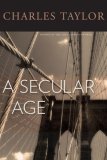
6. I continue to find myself going back to Charles Taylor's A Secular Age. This is a book that has dug a deep well that this generation and the next will continue to drink from.

12.24.2007

Top 10 Books in 2007: 7 and 8

7. Cormac McCarthy, No Country for Old Men. For the life of me, I can’t imagine how this book could possibly be a movie. Not because it isn’t a compelling story with all sorts of chilling thriller potential. And not because it isn’t populated with deep, fascinating, haunting characters (Chigurh is one of the most chilling characters I’ve run into in a while). The reason I can’t imagine this as a movie is because of McCarthy’s genius, namely his ability to paint such powerful pictures with such a simple palette and so few strokes. McCarthy’s prose is so frugal it borders on being stingy—and somehow (just how?!) he creates an engulfing world with two-bit dialogue and miserly description that says so much with so little.

The book also got me thinking: I think those who regale McCarthy for his “nihilism” (as I was wont to do a couple years ago) might be falling for a trap. I think we need to perhaps read McCarthy the way we ought to read Oscar Wilde’s Picture of Dorian Gray: we ought not confuse the author’s voice with that of the protagonist. So is it Chigurh who embodies Cormac McCarthy’s “worldview?” Or should we rather listen to the voice of Sheriff Bell?

Heading out into the chaotic moonscape that is Chigurh’s habitat (and creation, in a way), in an exchange with Molly, Sheriff Bell

pushed the chair back and rose and got down his gunbelt from the coatrack behind his desk and hung it over his shoulder and picked up his hat and put it on. What is it that Torbert says? About truth and justice?

We dedicate ourselves anew daily. Something like that.

I think I’m goin to commence dedicatin myself twice daily. It may come to three fore it’s over.

8. Edmund Wilson, Letters on Literature and Politics, 1912-1972. Wilson was one of the twentieth-century America’s great critics—from a time when criticism mattered (Norman Mailer, in a Paris Review interview, talks about his respect for critics like Wilson and Kazin), as well as a time when critics weren’t housed primarily in academia. Wilson and Kazin were part of a class of public intellectuals that has almost passed from the contemporary scene (Christopher Hitchens might be a bit of a throwback in this respect). I’m a correspondence junkie, so it’s easy for me to have a soft spot for a collection of letters from a sparkling figure like Wilson (who also was quite famous as a “character” in the literary scene; if the letters became a movie it would almost surely earn a ‘R’ rating). But letters like these also bring out my Luddite romanticism: it seems to me that the advent of email means we’ll never have books like this again. Our correspondence is too fleeting and flippant, too mechanical and utilitarian. No one will confuse our terse emails with the rich sorts of letters that Wilson and his circle used to swap. Wilson valued the letter (even the post card) as an outlet for literary flair and creation. Though he lacked any social filters and was only too willing to let his friends (like F. Scott Fitzgerald) know exactly what he thought of their work, one also finds here his appreciation for wise teachers and literary confreres.

12.23.2007

Top 10 Books in 2007: 9 and 10

Caving in to the general media mania for “lists” as the year draws to a close, I’ve looked over my shelves and recalled the ten best books I’ve read in 2007. A couple of provisos should be made: (1) These are books I read in 2007, not necessarily books that were published in 2007 (in fact, I think only one of them appeared in the past year); (2) by “best” I simply mean books that were significant for me in some way. Usually this just means that they were books I kept thinking about, books that kept re-inserting themselves into my consciousness and imagination, perhaps books that changed my mind in some way.

So over the next week or so I’ll be posting some brief reflections, in reverse order (though the ranking shouldn’t be taken too seriously).

9. Russell Kirk, Edmund Burke: A Genius Reconsidered. Since reading this book, I’ve continued to dive into Burke’s corpus (in fact, he will be an important part of the Studies in British Culture course I’m teaching in York, England next semester). As David Brooks has noted, Burke’s conservatism is precisely what has been forgotten by the neoconservatives that currently pass for the Right.

10. William Faulkner, The Sound and the Fury (in the old Random House Faulkner Reader, which also includes his Nobel Prize address). This is one of those reads by which I keep trying to make up for my lack of a liberal arts education. Faulkner is often cited as an important influence, or at least background, of the “Southern Catholic” writers I appreciate (Walker Percy, Flannery O’Connor), so I felt an obligation to dive into this rather intimidating book. You sort of have to let it wash over you. It requires the reader to be willing to be out of control, to feel lost, to trust the author that it’s going somewhere. At times I have to say it felt maddeningly obfuscating. But Faulkner also paints multiple words in a minimalism that brought to mind the sparse dialogue of Cormac McCarthy. In fact, I need to check about influences of Faulkner on McCarthy, since Faulkner also has an uncanny ability to let the third person narrator’s voice accommodate itself to shifting characters and locales, as well as an art for dialogue (including difficult dialects) that are true to the characters. Nothing short of a literary experience.

12.19.2007

Whose Stillborn God?


Even critics will have to recognize that The Stillborn God is a stunning book. (It is also a handsome book, just the sort of thing one expects from Knopf: stout, creamy, a pleasure to hold. Only deckled pages would have been an improvement.) Lilla’s erudition informs a sweeping narrative of the early modern liberation from “political theology” effected by Hobbes, giving rise to the “Great Separation” between private claims to revelation and the public arbitration of politics by appeals to reason alone. But the remainder of the story tracks all the ways that “political theology” came back to haunt the modern West—particularly in German contexts. The core problem of the book is that it buys into the simplistic myth of religious violence and secular peace, resting on the unsubstantiated empirical claim that “religion” (whatever that is) breeds violence whereas institutions of liberal democracy foster peace (current world conflicts not withstanding). Lilla also continues to cling to the myth of a “secular” political philosophy. In both of these respects, he is culpably ignorant of contemporary scholarship (particularly the work of William Cavanaugh, John Milbank, Nicholas Wolterstorff and Jeffrey Stout). And Lilla can’t simply plead that he’s doing history; what’s at stake is his historiography. Despite these fundamental problems, it remains an important book that can’t be ignored.

Mailer vs. Vidal: Those Were the Days!


The recent passing of Norman Mailer has been an occasion for the literati to reflect on both his genius and craziness (Christopher Hitchens' reminiscence is a treat). But perhaps the most voyeuristically captivating is Dick Cavett's recollection of the infamous episode of his late night TV talk show on ABC in 1971 wherein the talk show couch became an impromptu boxing ring as Norman Mailer squared off with Gore Vidal. The antics are ludicrous; and yet they stem from a sense that literature and criticism mattered (after all, the thrown-down-gauntlet that occassioned the fray was a claim Vidal made about Mailer in the New York Review of Books.)

But don't miss the really significant and depressing point: apparently in 1971, late night talk television was home to literary figures like Mailer, Vidal, and others. Can you imagine that? Can you imagine Cormac McCarthy and Joyce Carol Oates on Letterman? Or Alice Munro and Tom Wolfe making an appearance on Leno? Sadly, if this was ever going to happen on late night TV, I'd expect to see it on Comedy Central's Daily Show or Colbert Report.

12.11.2007

Is Religion Dangerous?


I'm not given to conspiracy theories about the "liberal" or supposedly anti-religious bias of the media. Indeed of late, with the emergence of the so-called "new atheism" of Dawkins, Dennett, Hitchens, et. al., I've been encouraged to see outlets like the New York Times and Washington Post bring in voices that weren't just echoing choirs, but pushed back on the shoddy scholarship and inflated claims of these works. But I must confess to being puzzled by one thing: why is it that Keith Ward's book, Is Religion Dangerous? (Eerdmans, 2007) has not yet been reviewed in a major outlet? It's British version (2006) was reviewed (and praised) in places like the Times Literary Supplement and the Daily Telegraph. Why has its American release been ignored by the Times, the Post, the Globe, and other usual suspects who've given space to the new atheism?

Ward's book is excellent. Regrettably, it was published (in the UK) before the appearance of Dawkin's God Delusion and Hitchens' God is Not Great: How Religion Poisons Everything; but nonetheless it already anticipates the sorts of flimsy arguments that they spout. While Ward's Christianity is a little liberal for my tastes (he's more enthusiastic about demythologizers like Tillich than I would be), the core of the book is on the money. It is even-handed, absent the screeching alarmism that tends to characterize these debates. And it is peppered with a wry British wit. Easily accessible for a general audience who's been following these conversations.

12.07.2007

A Postliberal Catholicism


For many Protestants, “postliberal” theology has often also been an invitation to a more “Catholic” theology—a theology that is more properly ecclesial, written from and for the confessing, worshiping community. For instance, postliberalism has emphasized the extent to which “the Word of God” is the church’s book, rightly interpreted only within the stakes and interests of the confessing ecclesia. In a similar way, postliberalism has emphasized a role for tradition that counters the tradition-allergies of both conservative and liberal Protestantism. Thus one might suggest that Robert Barron’s wonderful book, The Priority of Christ: Toward a Postliberal Catholicism (Brazos, 2007), brings postliberalism back to its Catholic home. Drawing on the insights and intuitions of Lindbeck, Frei and others, Barron articulates a Catholic systematic theology that takes “the narratives concerning Jesus Christ as epistemically basic.” Thus his postliberal Catholicism is a narrative Catholicism, teasing out the implications of this for Christology and the doctrine of God, as well as ethics and epistemology—all drawing on a prodigious knowledge of the history of philosophy and theology. On top of all this, it is a downright lovely book, written with a kind of winsome literary flair that exhibits the inviting clarity of a master teacher. Highly recommended for sharp undergraduates; required reading for graduate students and scholars.

12.01.2007

Not Your Grandma's Secularization Thesis


Taylor’s massive tome, A Secular Age, is one of those big, heavy landmark books that is destined to be a definitive classic. Taylor is out to tell a story about the emergence of our “secular” age, articulating a new kind of secularization thesis that also functions as a criticism of tired, triumphalistic versions that confidently predicted the steady withering of religion in our “modern” world. On Taylor’s account, secularity or secularization should not be merely identified with a diminishment in religious belief or the decline of religious observance. Rather, a “secular” age is one in which belief in God is no longer axiomatic. The shift that gave rise to secular modernity was a shift in the plausibility conditions of society such that even religious believers recognize the contestability of religious belief. In this respect, Europe (with little public religious observance) and the United States (rife with public religiosity and high religious participation) are both secular insofar as religious belief is considered one option among others. This shift in plausibility conditions makes possible the emergence of an “exclusive humanism” that, for the first time, imagines human flourishing without reference to transcendence. Essential reading.

For further discussion of Taylor's book by signicant scholars, visit The Immanent Frame.